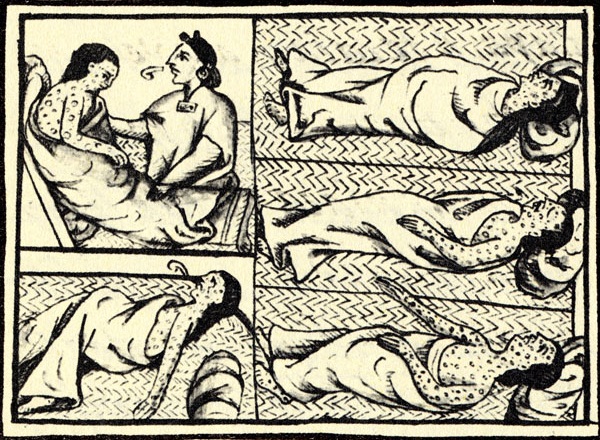
". . . [The epidemics] brought great desolation: a great many died of it. They could no longer walk about, but lay in their dwellings and sleeping places, no longer able to move or stir. They were unable to change position, to stretch out on their sides or face down, or raise their heads. And when they made a motion, they called out loudly. The pustules that covered people caused great desolation; very many people died of them, and many just starved to death; starvation reigned, and no one took care of others any longer. On some people, the pustules appeared only far apart, and they did not suffer greatly, nor did many of them die of it. But many people's faces were spoiled by it, their faces were made rough. Some lost an eye or were blinded."

". . . [A járvány] nagy pusztulást okozott: sokan meghaltak közülük. Nem tudtak járni többé, csak feküdtek a kunyhóikban és fekhelyeiken, többé nem tudtak mozogni vagy sürgölődni. Nem voltak képesek megfordulni vagy kinyújtózni, vagy a fejüket felemelni. Ha megmozdultak, hangosan felkiáltottak. Az embereket beborító kiütések nagy pusztítást végeztek; nagyon sok ember meghalt miattuk, sokan csak éhen haltak. Éhínség uralkodott, és többé már senki nem viselte mások gondját. Egyes embereken csak elszórtan jelentek meg a kiütések, és ők nem nagyon szenvedtek, közülük nem sokan haltak meg. De sok embernek elborították az arcát, rücskös lett az arcuk. Egyesek elveszítették egy szemüket vagy [teljesen] megvakultak."